
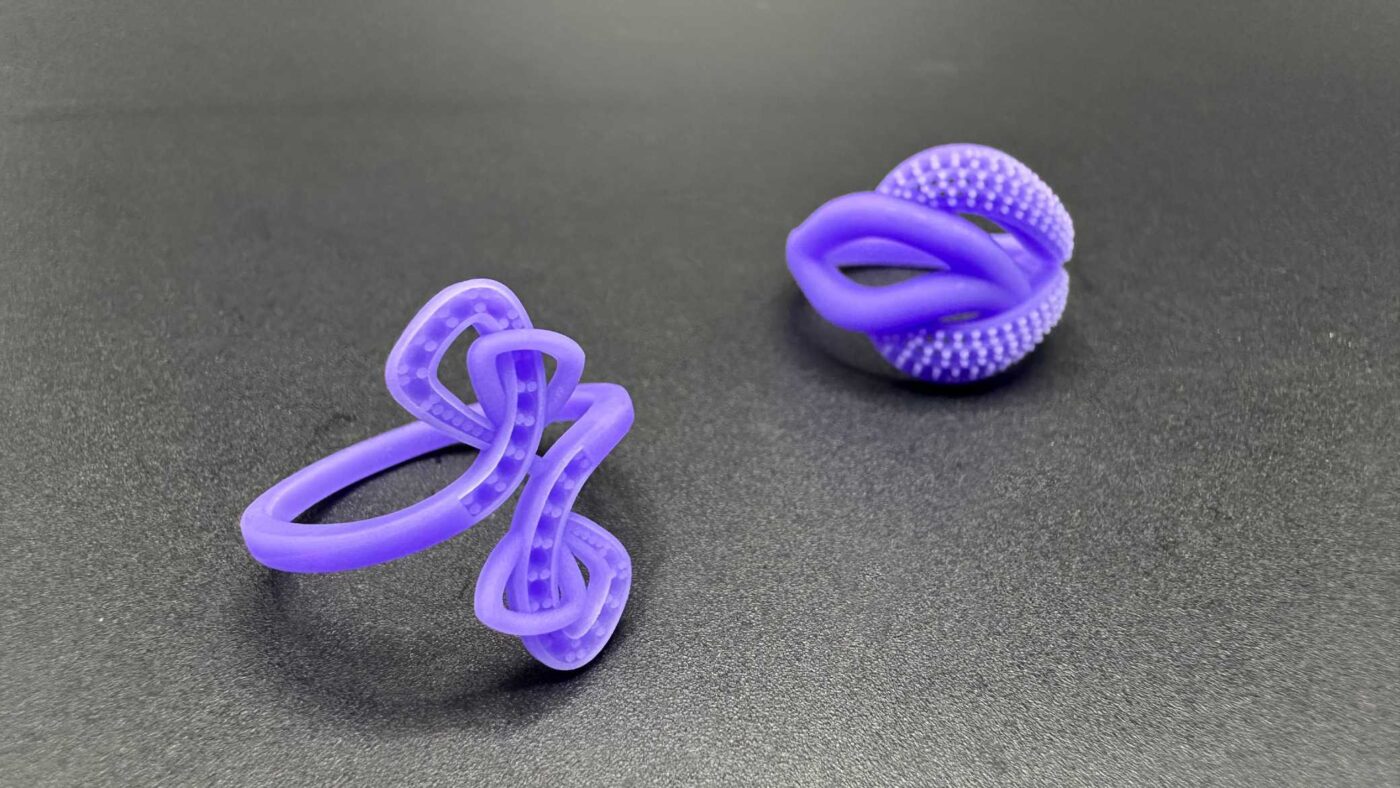
The global jewelry industry is undergoing a powerful digital transformation driven by advanced manufacturing technologies, evolving customer expectations, and the demand for faster product development cycles. Among these innovations, 3D printing — especially high-precision wax printing — has emerged as a game-changing solution that bridges the gap between creative imagination and large-scale production efficiency. For modern jewelry designers, the biggest challenge has always been converting complex design ideas into physical products while maintaining precision, surface quality, and cost-effectiveness. This is where Plempire’s advanced 3D printing ecosystem plays a critical role. By combining cutting-edge wax 3D printing technology, technical expertise, material science, and industry-focused solutions, Plempire empowers jewelry designers to move seamlessly from concept to creation while improving production scalability, design flexibility, and overall business competitiveness.
In the traditional jewelry manufacturing workflow, designers often rely on manual wax carving or CNC machining processes, both of which require significant time, skilled labor, and multiple revision cycles. Manual wax carving, although artistic, limits design complexity and repeatability. CNC machining improves precision but struggles with extremely fine details and organic structures often required in modern jewelry design. Plempire’s 3D printing services eliminate these limitations by introducing digital design integration with ultra-fine wax model production. Designers can now create detailed CAD-based jewelry models and directly convert them into production-ready wax patterns using advanced MultiJet Printing and high-resolution wax printing technologies. This transition from analog manufacturing to digital jewelry production is not just a technological shift — it represents a fundamental evolution in how jewelry is conceptualized, prototyped, and mass produced.
One of the most significant ways Plempire empowers jewelry designers is by enabling true design freedom. Modern jewelry consumers increasingly demand personalization, unique textures, geometric complexity, and lightweight structures. Achieving such intricate design features using traditional manufacturing methods is often expensive and time-consuming. Plempire’s 3D printing services allow designers to create highly complex lattice structures, micro-textures, filigree patterns, and organic curves without production constraints. This means designers can focus on creativity rather than worrying about manufacturability limitations. The result is faster innovation cycles, faster product launches, and stronger brand differentiation in highly competitive jewelry markets.
Another critical advantage is ultra-high precision and surface finish quality. Jewelry manufacturing requires extremely fine detail resolution because even micro-level surface imperfections can impact the final casting result. Plempire’s wax printing solutions are engineered to deliver ultra-thin layer printing, ensuring exceptional surface smoothness and dimensional accuracy. High surface quality directly reduces post-processing requirements such as manual polishing, sanding, and finishing. For jewelry businesses, this translates into lower labor costs, faster turnaround times, and consistent product quality across production batches. Designers benefit because their original design vision is preserved without compromise during manufacturing.
Speed is another major factor driving the adoption of Plempire’s 3D printing services among jewelry designers and manufacturers. Traditional jewelry prototyping may take days or weeks depending on complexity, whereas advanced wax 3D printing can produce multiple high-precision patterns within hours. Faster batch printing capability allows jewelry businesses to accelerate product development timelines, respond quickly to market trends, and test new collections without significant investment risks. For designers working in fast-moving fashion jewelry segments or seasonal collections, rapid prototyping and production flexibility can be a major competitive advantage. Plempire’s technology enables businesses to scale production dynamically based on demand fluctuations while maintaining consistent quality standards.
Mass customization is becoming one of the strongest trends in the global jewelry industry. Customers increasingly want personalized jewelry pieces, including customized names, shapes, birthstones, and symbolic patterns. Plempire’s digital manufacturing workflow makes mass customization highly scalable. Designers can modify CAD models quickly and produce customized wax patterns without redesigning the entire manufacturing process. This allows jewelry brands to offer personalized collections while maintaining production efficiency and profitability. For e-commerce jewelry brands and direct-to-consumer jewelry startups, this capability opens new revenue opportunities and customer engagement strategies.
Plempire’s services go beyond hardware solutions. Technical support and application expertise form a critical part of the value proposition. Many jewelry designers and manufacturers transitioning to digital manufacturing face challenges in workflow integration, material optimization, printer calibration, and casting compatibility. Plempire provides end-to-end technical support that helps businesses optimize print settings, choose the right materials, and integrate 3D printing into existing casting workflows. This reduces adoption barriers and ensures customers achieve maximum return on investment from their 3D printing systems.
Material science innovation is another area where Plempire empowers jewelry production. High-quality wax printing materials are specifically engineered for investment casting compatibility, clean burnout performance, and dimensional stability. Poor wax quality can lead to casting defects such as residue contamination, surface imperfections, or structural distortion. Plempire’s material solutions are designed to minimize these risks, ensuring consistent casting results and improved yield rates. For jewelry manufacturers producing at scale, improved casting reliability directly impacts production profitability and quality control consistency.
Investment casting remains the dominant manufacturing method for fine jewelry production worldwide. Plempire’s wax 3D printing solutions integrate seamlessly with traditional investment casting processes. By producing highly accurate wax patterns, Plempire reduces mold defects, improves metal flow during casting, and enhances final product quality. The synergy between digital wax printing and traditional casting allows jewelry manufacturers to modernize their workflow without completely replacing existing production infrastructure. This hybrid manufacturing approach makes digital transformation more practical and cost-effective for businesses of all sizes.
From a business perspective, Plempire’s 3D printing services significantly improve production efficiency and cost optimization. Reduced manual labor requirements, lower material waste, faster prototyping cycles, and higher casting success rates all contribute to improved operational margins. For small jewelry workshops, this means the ability to compete with larger manufacturers. For large-scale jewelry manufacturers, it means faster scaling and improved production planning. By reducing production uncertainty and improving workflow predictability, Plempire helps businesses build more stable and profitable manufacturing operations.
Another important aspect of Plempire’s ecosystem is digital workflow integration. Modern jewelry production increasingly relies on digital design tools such as CAD modeling software, simulation tools, and digital asset libraries. Plempire’s 3D printing systems are designed to integrate seamlessly into digital jewelry design pipelines. Designers can move from concept sketches to CAD modeling to wax printing without intermediate manual processes. This reduces design errors, accelerates approval cycles, and improves collaboration between design teams and manufacturing teams.
For jewelry startups and independent designers, Plempire’s technology lowers entry barriers into professional jewelry manufacturing. Historically, launching a jewelry brand required significant investment in tooling, molds, and manual craftsmanship infrastructure. With digital wax 3D printing, designers can produce professional-grade prototypes and production models without large upfront capital investment. This democratization of jewelry manufacturing technology enables more creative entrepreneurs to enter the market and innovate.
Sustainability is becoming increasingly important in modern manufacturing industries, including jewelry production. Plempire’s digital manufacturing approach supports sustainable production practices by reducing material waste, minimizing rejected casting components, and improving energy efficiency compared to traditional manufacturing methods. Digital inventory and on-demand production models reduce overproduction risks and minimize unused inventory. As environmental responsibility becomes a key brand value for many jewelry companies, adopting efficient digital manufacturing solutions becomes strategically important.
Training and knowledge transfer are essential components of successful digital transformation. Plempire supports jewelry businesses through training programs, technical consultation, and workflow optimization guidance. By educating designers and production teams about best practices in wax printing, casting integration, and digital workflow management, Plempire ensures customers can fully utilize the potential of their technology investment. This long-term partnership approach builds strong customer relationships and supports sustainable business growth.
The future of jewelry manufacturing will be heavily influenced by digital design automation, AI-driven design optimization, and advanced additive manufacturing technologies. Plempire is positioned as a key technology enabler in this evolution. As consumer expectations continue to evolve toward personalization, rapid product availability, and design uniqueness, jewelry businesses must adopt agile manufacturing technologies. Plempire’s solutions provide the technological foundation needed to support this next generation of jewelry production innovation.
From concept development to final casting production, Plempire’s 3D printing services provide a comprehensive digital manufacturing bridge. Designers can experiment with complex geometries, test multiple variations, and validate design performance before committing to full-scale production. This reduces product development risk while improving product innovation quality. The ability to iterate designs rapidly is especially valuable in fashion-driven jewelry markets where trend cycles change rapidly.
In conclusion, Plempire’s 3D printing services are transforming how jewelry designers and manufacturers approach product development, manufacturing efficiency, and market competitiveness. By enabling high-precision wax printing, scalable mass customization, digital workflow integration, material optimization, and strong technical support, Plempire empowers jewelry designers to fully realize their creative vision while maintaining production efficiency and business profitability. As the jewelry industry continues to move toward digital manufacturing, companies that adopt advanced 3D printing technologies will gain significant advantages in speed, innovation capability, and customer personalization. Plempire stands at the forefront of this transformation, providing the tools, expertise, and technology ecosystem needed for jewelry businesses to successfully transition from concept to creation in the modern digital manufacturing era.
