
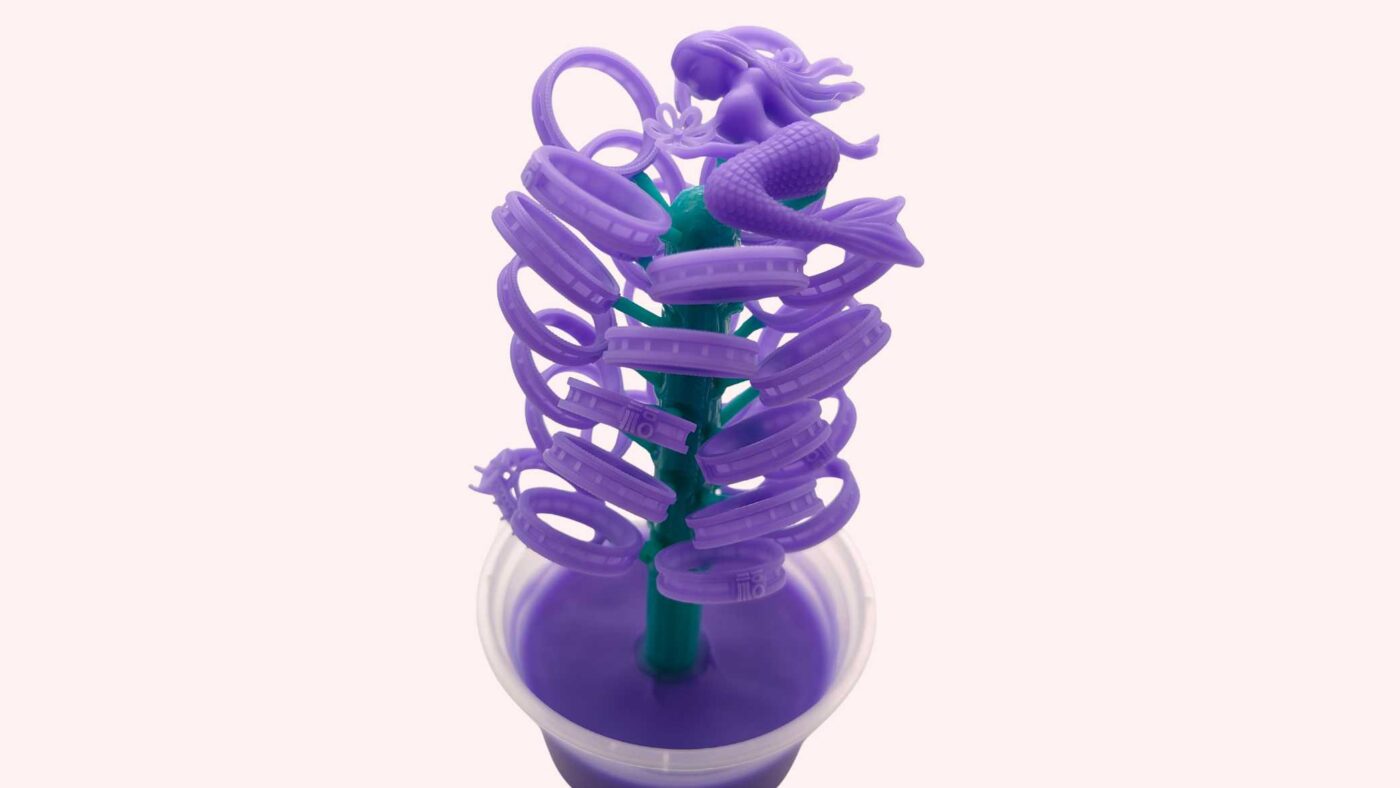
The jewelry manufacturing industry has experienced remarkable technological evolution over the past two decades, transitioning from purely manual craftsmanship to highly advanced digital production ecosystems. Among the most transformative innovations driving this change is 3D wax printing, a specialized additive manufacturing technology designed specifically for precision investment casting. In modern jewelry design and production, 3D wax printing is no longer just an optional tool — it has become a core manufacturing solution that enables designers and manufacturers to produce complex, high-quality jewelry pieces faster, more accurately, and more cost-effectively than ever before. As consumer demand shifts toward personalized jewelry, intricate detailing, and rapid product availability, 3D wax printing is redefining how jewelry moves from design concept to finished product.
Traditional jewelry manufacturing relies heavily on manual wax carving, rubber mold replication, and CNC machining processes. While these methods have produced beautiful jewelry for centuries, they come with limitations. Manual wax carving requires exceptional craftsmanship and significant time investment. Even highly skilled artisans face challenges when producing ultra-fine geometric structures or organic design patterns consistently. CNC machining improves precision but struggles with complex internal structures and extremely delicate detailing. Additionally, traditional tooling and mold creation processes can significantly slow down product development cycles and increase production costs. In contrast, 3D wax printing removes many of these constraints by introducing a fully digital design-to-production workflow.
At the core of modern jewelry manufacturing transformation is the integration of CAD-based jewelry design with high-resolution wax 3D printing. Designers can create highly detailed digital models using professional jewelry CAD software and directly convert them into physical wax patterns using 3D wax printing technology. This direct digital manufacturing process eliminates multiple manual production stages, reduces human error, and dramatically improves design accuracy. The ability to maintain digital design integrity throughout production ensures that the final jewelry piece matches the original creative vision.
One of the most significant advantages of 3D wax printing is ultra-high precision. Jewelry components often require microscopic detail accuracy because even small dimensional deviations can impact gemstone fitting, metal casting quality, and overall product aesthetics. Modern wax 3D printing technologies are capable of producing extremely thin layer resolutions, enabling ultra-smooth surfaces and sharp detailing. High-resolution printing reduces the need for extensive post-processing such as polishing or manual surface correction. For jewelry manufacturers, this leads to faster production cycles and consistent product quality across large production batches.
Another major benefit of 3D wax printing is its ability to handle highly complex geometries that are impossible or extremely difficult to achieve through traditional manufacturing methods. Modern jewelry designs increasingly incorporate lattice structures, micro-perforations, lightweight frameworks, and organic sculptural forms. These designs improve both visual aesthetics and wearability by reducing overall weight without compromising structural strength. 3D wax printing allows designers to experiment with these advanced design elements freely, pushing the boundaries of jewelry innovation.
Speed and efficiency are also key drivers behind the adoption of 3D wax printing in jewelry manufacturing. Traditional wax model production can take several days depending on design complexity and production volume. With advanced wax printing systems, manufacturers can produce multiple wax models simultaneously within hours. Faster batch production enables jewelry businesses to respond quickly to market trends, seasonal demand fluctuations, and custom order requirements. Rapid prototyping capabilities also allow designers to test multiple design variations quickly before moving to full-scale production, reducing product development risks.
Mass customization is becoming one of the defining trends in modern jewelry markets. Consumers increasingly expect personalized jewelry options such as custom engravings, name-based jewelry, birthstone combinations, and unique symbolic designs. Traditional manufacturing methods make customization expensive and time-consuming. 3D wax printing makes mass customization highly scalable by allowing manufacturers to modify digital design files quickly and produce customized wax models without retooling or redesigning production processes. This capability enables jewelry brands to offer personalized collections while maintaining production efficiency and profitability.
Investment casting compatibility is another critical factor that makes 3D wax printing highly valuable in jewelry manufacturing. Investment casting requires wax patterns that burn out cleanly without leaving residue or defects in casting molds. High-quality wax printing materials are engineered to ensure clean burnout performance, dimensional stability, and structural integrity during mold formation. By producing highly accurate wax patterns, 3D wax printing improves metal flow during casting, reduces casting defects, and increases final product quality consistency.
Cost optimization is another major advantage driving the adoption of wax 3D printing technology. Although the initial investment in 3D printing equipment may be higher than traditional wax carving tools, long-term operational costs are often significantly lower. Reduced labor requirements, lower material waste, improved casting success rates, and faster production turnaround times contribute to higher manufacturing efficiency. For small jewelry businesses, 3D wax printing provides access to professional-grade manufacturing capabilities without requiring large-scale production infrastructure. For large manufacturers, it enables scalable production growth while maintaining quality control.
Digital workflow integration is also revolutionizing how jewelry design teams collaborate with production teams. Digital design libraries, version control systems, and cloud-based design collaboration tools allow designers, engineers, and production managers to work together seamlessly. 3D wax printing fits naturally into this digital manufacturing ecosystem by allowing instant conversion of approved digital designs into production-ready wax patterns. This eliminates communication gaps between design and production teams and reduces design interpretation errors.
Sustainability is becoming increasingly important in modern manufacturing industries, including jewelry production. 3D wax printing supports sustainable manufacturing practices by reducing material waste, minimizing rejected casting components, and enabling on-demand production models. Traditional jewelry manufacturing often involves excess material removal, mold waste, and overproduction. Digital wax printing allows manufacturers to produce only what is needed, when it is needed. This reduces environmental impact and supports sustainable production strategies.
The rise of e-commerce jewelry brands and direct-to-consumer business models has further accelerated the adoption of digital manufacturing technologies. Online jewelry businesses must respond quickly to customer demand, launch new designs frequently, and offer personalized product options. 3D wax printing enables fast design-to-production cycles that support agile product development strategies. Jewelry brands can test new designs in small batches, analyze customer response, and scale production based on real-time demand data.
Training and technical expertise are essential for successful adoption of 3D wax printing technology. Manufacturers must understand print parameter optimization, material selection, casting compatibility, and post-processing workflows. Companies providing complete ecosystem support — including hardware, materials, and technical training — play a crucial role in helping jewelry businesses transition successfully to digital manufacturing. This comprehensive support approach reduces adoption risk and improves long-term production performance.
Looking toward the future, the role of 3D wax printing in jewelry manufacturing is expected to grow even further. Integration with artificial intelligence design optimization tools, automated production scheduling, and smart factory manufacturing systems will continue to enhance production efficiency and design innovation capabilities. As additive manufacturing technology continues to improve, future wax printing systems will likely achieve even higher resolution, faster printing speeds, and improved material performance.
In conclusion, 3D wax printing is revolutionizing jewelry manufacturing by enabling high-precision production, design complexity freedom, mass customization scalability, and efficient digital manufacturing workflows. It allows jewelry designers to push creative boundaries while maintaining production efficiency and product quality consistency. By reducing production timelines, minimizing manufacturing risks, and enabling sustainable production practices, 3D wax printing has become a critical technology driving the future of jewelry manufacturing. As consumer expectations continue evolving toward personalized, high-quality, and rapidly available jewelry products, manufacturers who adopt advanced wax 3D printing technologies will be better positioned to succeed in the competitive global jewelry market. The transition from traditional manufacturing methods to digital additive manufacturing is not just a technological upgrade — it represents a complete transformation in how jewelry is designed, produced, and delivered in the modern era.
